Effective immediately, as of 4:52 PM on Wednesday, March 14, 2018, all required microbiological testing of water samples from the area affected by the boil water advisory issued for the Kaufman Street in Brunswick on Tuesday, March 13, 2018 has passed. Results have been verified by our state-licensed technician within a certified laboratory environment.
This notification is an ALL-CLEAR and water used for drinking will no longer need to be boiled.
Though the water from this system can now be considered to meet safe drinking water standards, please discard any ice made within the last 48 hours.
If you are receiving this information from any source other than our Public Emergency Notification System by Everbridge, please subscribe to receive these alerts via text, email or phone call instantly when the alert is posted.
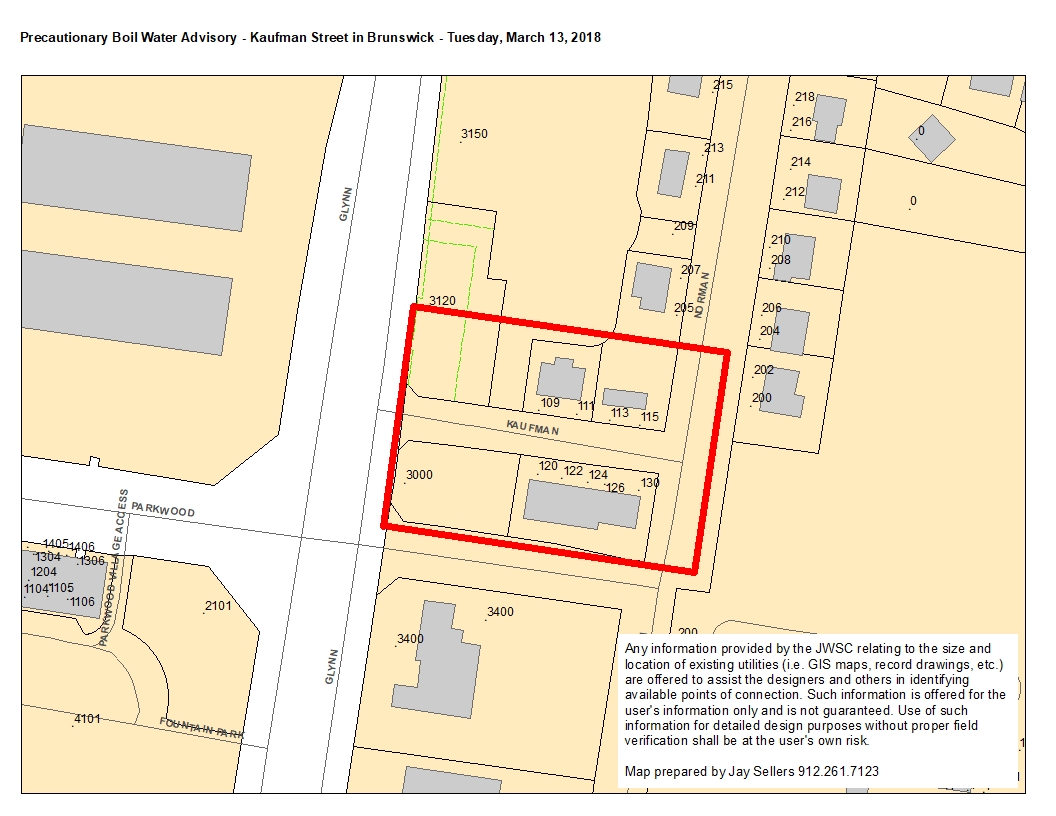
The Brunswick water system lost pressure to Kaufman Street on Tuesday, March 13, 2018 due to the aged water main main needing to be replaced by the BGJWSC. Once service has been restored, BGJWSC lab personnel will collect water samples for testing. This testing, which will take between 22 and 24 hours, should be completed the evening of Wednesday, March 14, at which time an all-clear message will be posted.
This loss of pressure in the distribution system may cause back-pressure, back-siphonage, or a net movement of water from outside the pipe to the inside through cracks, breaks, or joints in the distribution system that are common in all water systems. Such a system failure carries with it a potential that bacterial contamination or other disease-causing organisms could enter the water distribution system. These conditions may pose an imminent and substantial health endangerment to persons served by the water system.
This precautionary boil water advisory is being published as a warning to those that live in, work in, or travel through the affected area. During the period of the loss of pressure, water will also not be available for fire suppression use. The map below indicates the limit to which this precautionary boil water advisory applies:
What should I do?
DO NOT DRINK THE WATER WITHOUT BOILING IT FIRST. Bring all water to a rolling boil for at least (3) three minutes, and let it cool before using, or use bottled water. Boiled or bottled water should be used for drinking, making ice, brushing teeth, washing dishes, and food preparation until further notice. Boiling kills bacteria and other organisms in the water. ALL STORED WATER, DRINK OR ICE MADE RECENTLY FROM THIS SUPPLY SHALL BE DISCARDED.
Bathing, showering and toilet flushing may be performed using water from the tap without boiling it first.
Inadequately treated water may contain disease-causing organisms. These organisms include bacteria, viruses, and parasites which can cause symptoms such as diarrhea, cramps, nausea, headaches, or other symptoms. They may pose a special health risk for infants, young children, some of the elderly and people with severely compromised immune systems.
The symptoms above are not caused only by organisms in drinking water. If you experience any of these symptoms and they persist, you may want to seek medical advice. People at increased risk should seek advice about drinking water from their health care providers.
What is being done?
As soon as pressure can be restored to the distribution system, our water lab personnel will take water samples that will be fully evaluated over the next twenty-four to forty-eight hour period following the repair of the main. Once we have determined that there is no longer a threat of harmful bacteria in the water, we will inform you that you are no longer required to boil your water by posting an update here on our website: http://www.bgjwsc.org.
Effective immediately, as of 7:52 PM on Monday, March 12, 2018, all required microbiological testing of water samples from the area affected by the boil water advisory issued for the Shell Drive in Brunswick on Sunday, March 11, 2018 has passed. Results have been verified by our state-licensed technician within a certified laboratory environment.
This notification is an ALL-CLEAR and water used for drinking will no longer need to be boiled.
Though the water from this system can now be considered to meet safe drinking water standards, please discard any ice made within the last 48 hours.
If you are receiving this information from any source other than our Public Emergency Notification System by Everbridge, please subscribe to receive these alerts via text, email or phone call instantly when the alert is posted.
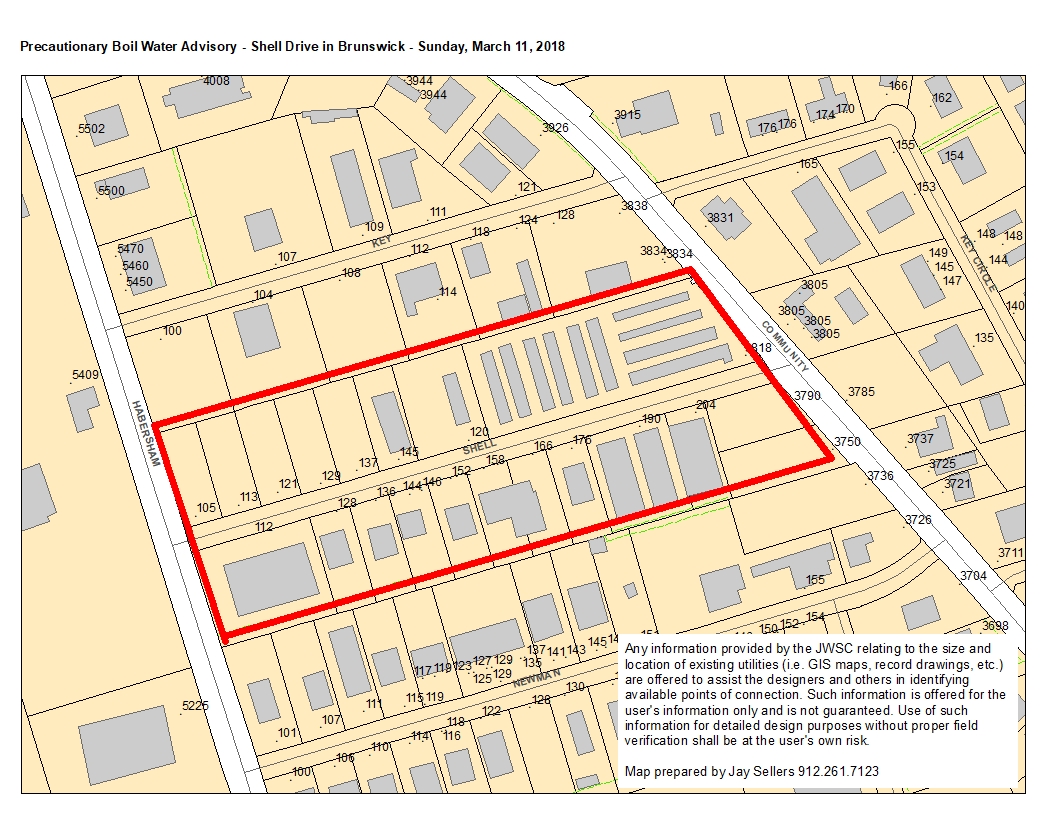
The Brunswick water system lost pressure to Shell Drive on Sunday, March 11, 2018 due to a driver hitting a fire hydrant and severing it’s connection to the water main requiring isolation to the street for repairs. Once service has been restored, BGJWSC lab personnel will collect water samples for testing. This testing, which will take between 22 and 24 hours, should be completed the evening of Monday, March 12, at which time an all-clear message will be posted.
This loss of pressure in the distribution system may cause back-pressure, back-siphonage, or a net movement of water from outside the pipe to the inside through cracks, breaks, or joints in the distribution system that are common in all water systems. Such a system failure carries with it a potential that bacterial contamination or other disease-causing organisms could enter the water distribution system. These conditions may pose an imminent and substantial health endangerment to persons served by the water system.
This precautionary boil water advisory is being published as a warning to those that live in, work in, or travel through the affected area. During the period of the loss of pressure, water will also not be available for fire suppression use. The map below indicates the limit to which this precautionary boil water advisory applies:
What should I do?
DO NOT DRINK THE WATER WITHOUT BOILING IT FIRST. Bring all water to a rolling boil for at least (3) three minutes, and let it cool before using, or use bottled water. Boiled or bottled water should be used for drinking, making ice, brushing teeth, washing dishes, and food preparation until further notice. Boiling kills bacteria and other organisms in the water. ALL STORED WATER, DRINK OR ICE MADE RECENTLY FROM THIS SUPPLY SHALL BE DISCARDED.
Bathing, showering and toilet flushing may be performed using water from the tap without boiling it first.
Inadequately treated water may contain disease-causing organisms. These organisms include bacteria, viruses, and parasites which can cause symptoms such as diarrhea, cramps, nausea, headaches, or other symptoms. They may pose a special health risk for infants, young children, some of the elderly and people with severely compromised immune systems.
The symptoms above are not caused only by organisms in drinking water. If you experience any of these symptoms and they persist, you may want to seek medical advice. People at increased risk should seek advice about drinking water from their health care providers.
What is being done?
As soon as pressure can be restored to the distribution system, our water lab personnel will take water samples that will be fully evaluated over the next twenty-four to forty-eight hour period following the repair of the main. Once we have determined that there is no longer a threat of harmful bacteria in the water, we will inform you that you are no longer required to boil your water by posting an update here on our website: http://www.bgjwsc.org.
In order to perform sewer service repairs in the area, the 1100 block of Union St in Brunswick will be closed to thru traffic from 7:00 a.m. until 5:00 p.m. on Monday, March 12th, 2018. Homeowner access will be maintained but all other traffic should be prepared to take another route.
For more information on the project, please contact Jay Sellers at 912.261.7123 or Charita Emory at 912.261.7151.
The BGJWSC apologizes in advance for the inconvenience
Effective immediately, as of 11:24 AM on Friday, March 9, 2018, all required microbiological testing of water samples from the area affected by the boil water advisory issued for the 1600 block of Johnston Street in Brunswick on Thursday, March 8, 2018 has passed. Results have been verified by our state-licensed technician within a certified laboratory environment.
This notification is an ALL-CLEAR and water used for drinking will no longer need to be boiled.
Though the water from this system can now be considered to meet safe drinking water standards, please discard any ice made within the last 48 hours.
If you are receiving this information from any source other than our Public Emergency Notification System by Everbridge, please subscribe to receive these alerts via text, email or phone call instantly when the alert is posted.
The BGJWSC has a sewer repair project at 19 Wimbledon Court in the Sea Palms West subdivision on Saint Simons Island.
A 12 inch ductile gravity main is being repaired near Lift Station 2032 off of Frederica Road. Because of the 25 foot depth, the repairs have been turned over to a contractor. We apologize for any disruptions to traffic or noise issues created by this repair project. Every attempt to have these repairs completed as soon and as safely as possible are being made.
Requests for information can be directed to Jay Sellers at (912) 261-7123.
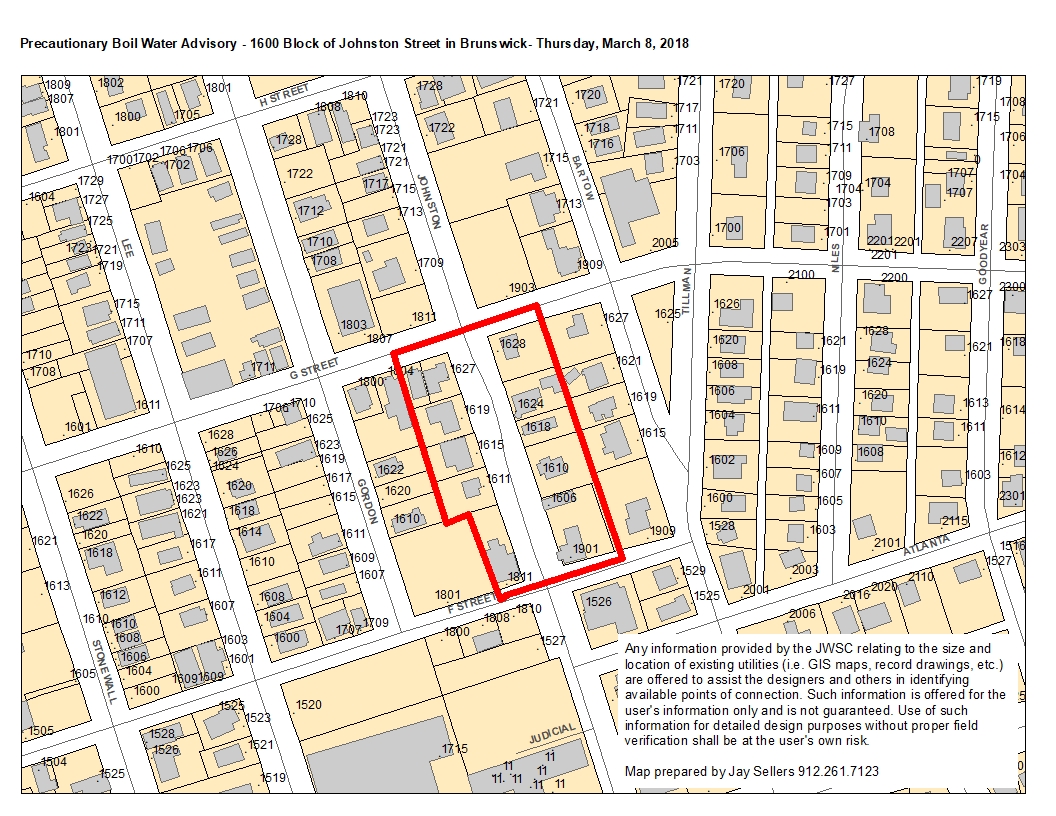
The Brunswick water system lost pressure to the 1600 block of Johnston Street on Thursday, March 8, 2018 due to a BGJWSC sewer construction crew digging into a 2″ PVC water main. Service has been restored. BGJWSC lab personnel have collected water samples for testing. This testing, which will take between 22 and 24 hours, should be completed the evening of Friday, March 9, at which time an all-clear message will be posted.
This loss of pressure in the distribution system may cause back-pressure, back-siphonage, or a net movement of water from outside the pipe to the inside through cracks, breaks, or joints in the distribution system that are common in all water systems. Such a system failure carries with it a potential that bacterial contamination or other disease-causing organisms could enter the water distribution system. These conditions may pose an imminent and substantial health endangerment to persons served by the water system.
This precautionary boil water advisory is being published as a warning to those that live in, work in, or travel through the affected area. During the period of the loss of pressure, water will also not be available for fire suppression use. The map below indicates the limit to which this precautionary boil water advisory applies:
What should I do?
DO NOT DRINK THE WATER WITHOUT BOILING IT FIRST. Bring all water to a rolling boil for at least (3) three minutes, and let it cool before using, or use bottled water. Boiled or bottled water should be used for drinking, making ice, brushing teeth, washing dishes, and food preparation until further notice. Boiling kills bacteria and other organisms in the water. ALL STORED WATER, DRINK OR ICE MADE RECENTLY FROM THIS SUPPLY SHALL BE DISCARDED.
Bathing, showering and toilet flushing may be performed using water from the tap without boiling it first.
Inadequately treated water may contain disease-causing organisms. These organisms include bacteria, viruses, and parasites which can cause symptoms such as diarrhea, cramps, nausea, headaches, or other symptoms. They may pose a special health risk for infants, young children, some of the elderly and people with severely compromised immune systems.
The symptoms above are not caused only by organisms in drinking water. If you experience any of these symptoms and they persist, you may want to seek medical advice. People at increased risk should seek advice about drinking water from their health care providers.
What is being done?
As soon as pressure can be restored to the distribution system, our water lab personnel will take water samples that will be fully evaluated over the next twenty-four to forty-eight hour period following the repair of the main. Once we have determined that there is no longer a threat of harmful bacteria in the water, we will inform you that you are no longer required to boil your water by posting an update here on our website: http://www.bgjwsc.org.
Beginning in September 2017, the BGJWSC is now publishing a monthly newsletter in a low-cost effort to guarantee that the news most relevant to you will be distributed with your billing statement each month. When necessary, news too long to print will be presented in a brief edition with more information referenced with a link to our website.