Category: Boil Water Advisory

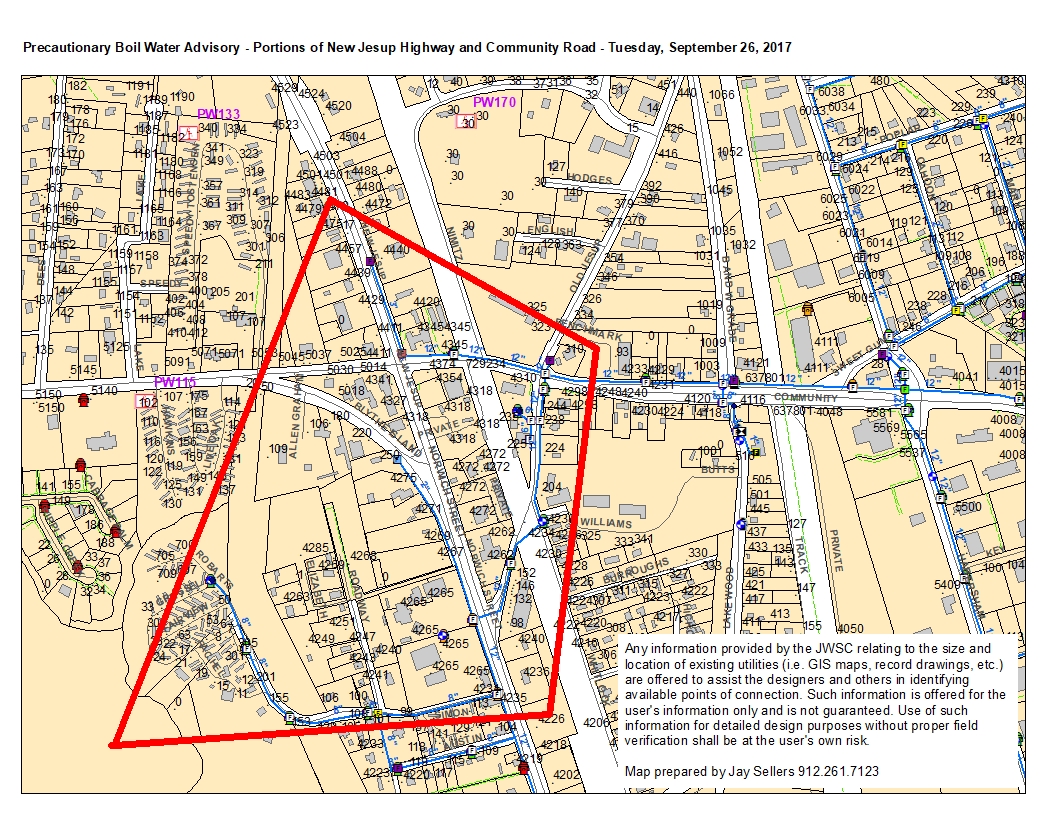
  • Precautionary Boil Water Advisory – Portions of New Jesup Highway in Brunswick – Tuesday, September 26, 2017

    DRINKING WATER WARNING

    BOIL YOUR WATER FOR THREE MINUTES BEFORE USING

    The Brunswick water system lost pressure in the area serving portions of New Jesup Highway and surrounding areas at or about 10:30 am on Tuesday, September 26, 2017 due to a 12″ water main break, the cause of which is unknown until the break has been excavated. BGJWSC staff in onsite now restoring service. Once service is restored, BGJWSC lab personnel will collect water samples for testing. This testing, which will take between 44 and 48 hours due to the presence of a restaurant, full service gas station and a school, should be completed the afternoon of Thursday, September 28, at which time an all-clear message will be posted.

    This loss of pressure in the distribution system may cause back-pressure, back-siphonage, or a net movement of water from outside the pipe to the inside through cracks, breaks, or joints in the distribution system that are common in all water systems. Such a system failure carries with it a potential that bacterial contamination or other disease-causing organisms could enter the water distribution system. These conditions may pose an imminent and substantial health endangerment to persons served by the water system.

    This precautionary boil water advisory is being published as a warning to those that live in, work in, or travel through the affected area. During the period of the loss of pressure, water will also not be available for fire suppression use. The map below indicates the limit to which this precautionary boil water advisory applies:
    What should I do?

    • DO NOT DRINK THE WATER WITHOUT BOILING IT FIRST. Bring all water to a rolling boil for at least (3) three minutes, and let it cool before using, or use bottled water. Boiled or bottled water should be used for drinking, making ice, brushing teeth, washing dishes, and food preparation until further notice. Boiling kills bacteria and other organisms in the water. ALL STORED WATER, DRINK OR ICE MADE RECENTLY FROM THIS SUPPLY SHALL BE DISCARDED.
    • Bathing, showering and toilet flushing may be performed using water from the tap without boiling it first.
    • Inadequately treated water may contain disease-causing organisms. These organisms include bacteria, viruses, and parasites which can cause symptoms such as diarrhea, cramps, nausea, headaches, or other symptoms. They may pose a special health risk for infants, young children, some of the elderly and people with severely compromised immune systems.
    • The symptoms above are not caused only by organisms in drinking water. If you experience any of these symptoms and they persist, you may want to seek medical advice. People at increased risk should seek advice about drinking water from their health care providers.

    What is being done?

    As soon as pressure can be restored to the distribution system, our water lab personnel will take water samples that will be fully evaluated over the next twenty-four to forty-eight hour period following the repair of the main. Once we have determined that there is no longer a threat of harmful bacteria in the water, we will inform you that you are no longer required to boil your water by posting an update here on our website: http://www.bgjwsc.org.

    Date distributed: 9/26/17 11:27 AM

    What is a Boil Water Advisory? READ MORE HERE
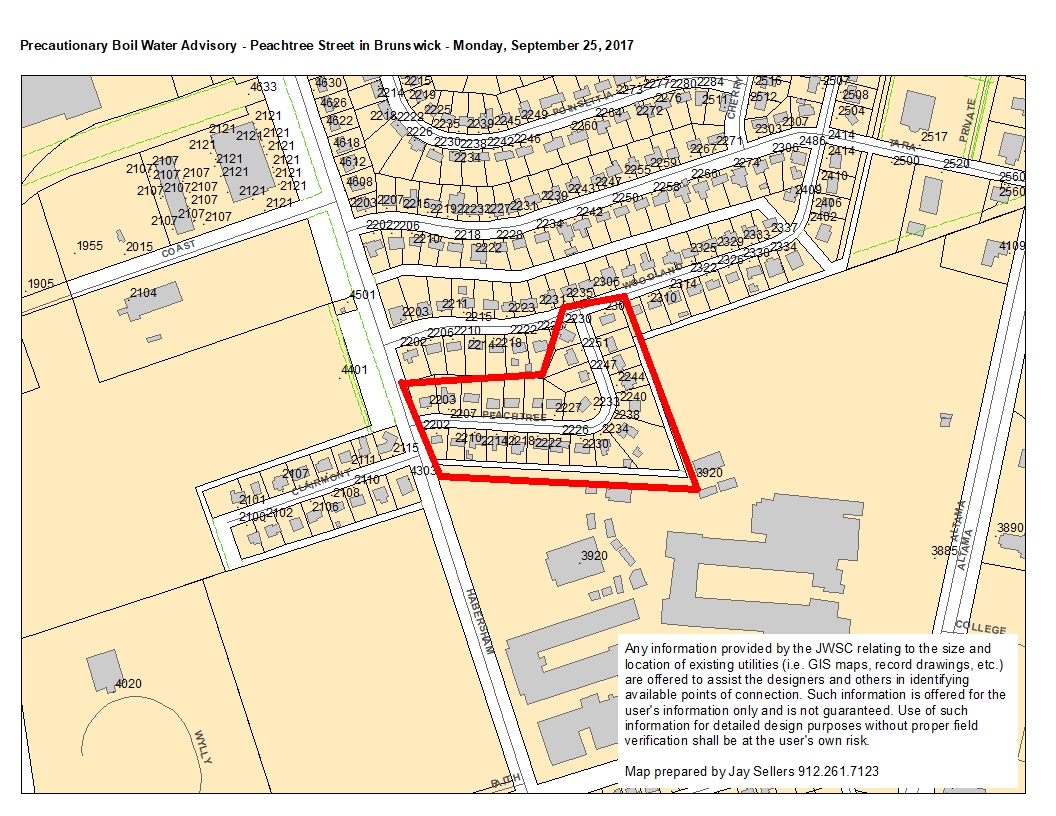
     

  • Precautionary Boil Water Advisory – Peachtree Street in Brunswick – Monday, September 25, 2017

    DRINKING WATER WARNING

    BOIL YOUR WATER FOR THREE MINUTES BEFORE USING

    The Brunswick water system lost pressure in the area serving Peachtree Street at 11:30 am on Monday, September 25, 2017 due to a 6″ transite main being hit by an independent utility contractor. BGJWSC staff in onsite now restoring service. Once service is restored, BGJWSC lab personnel will collect water samples for testing. This testing, which takes between 22 and 24 hours, should be completed the afternoon of Tuesday, September 26, at which time an all-clear message will be posted.

    This loss of pressure in the distribution system may cause back-pressure, back-siphonage, or a net movement of water from outside the pipe to the inside through cracks, breaks, or joints in the distribution system that are common in all water systems. Such a system failure carries with it a potential that bacterial contamination or other disease-causing organisms could enter the water distribution system. These conditions may pose an imminent and substantial health endangerment to persons served by the water system.

    This precautionary boil water advisory is being published as a warning to those that live in, work in, or travel through the affected area. During the period of the loss of pressure, water will also not be available for fire suppression use. The map below indicates the limit to which this precautionary boil water advisory applies:


    What should I do?

    • DO NOT DRINK THE WATER WITHOUT BOILING IT FIRST. Bring all water to a rolling boil for at least (3) three minutes, and let it cool before using, or use bottled water. Boiled or bottled water should be used for drinking, making ice, brushing teeth, washing dishes, and food preparation until further notice. Boiling kills bacteria and other organisms in the water. ALL STORED WATER, DRINK OR ICE MADE RECENTLY FROM THIS SUPPLY SHALL BE DISCARDED.
    • Bathing, showering and toilet flushing may be performed using water from the tap without boiling it first.
    • Inadequately treated water may contain disease-causing organisms. These organisms include bacteria, viruses, and parasites which can cause symptoms such as diarrhea, cramps, nausea, headaches, or other symptoms. They may pose a special health risk for infants, young children, some of the elderly and people with severely compromised immune systems.
    • The symptoms above are not caused only by organisms in drinking water. If you experience any of these symptoms and they persist, you may want to seek medical advice. People at increased risk should seek advice about drinking water from their health care providers.

    What is being done?

    As soon as pressure can be restored to the distribution system, our water lab personnel will take water samples that will be fully evaluated over the next twenty-four to forty-eight hour period following the repair of the main. Once we have determined that there is no longer a threat of harmful bacteria in the water, we will inform you that you are no longer required to boil your water by posting an update here on our website: http://www.bgjwsc.org.

    Date distributed: 9/25/17 11:38 AM

    What is a Boil Water Advisory? READ MORE HERE
  • All-Clear for Boil Water Advisory Issued for 3400 Block of MLK Blvd on Friday, September 22, 2017

    Effective immediately, as of 2:12 PM on Saturday, September 23, 2017, all required microbiological testing of water samples from the area affected by the boil water advisory issued for the 3400 block of MLK Blvd on Friday, September 22, 2017 has passed. Results have been verified by our state-licensed technician within a certified laboratory environment.

    This notification is an ALL-CLEAR and water used for drinking will no longer need to be boiled.

    Though the water from this system can now be considered to meet safe drinking water standards, please discard any ice made within the last 48 hours.

    What is a Boil Water Advisory? READ MORE HERE
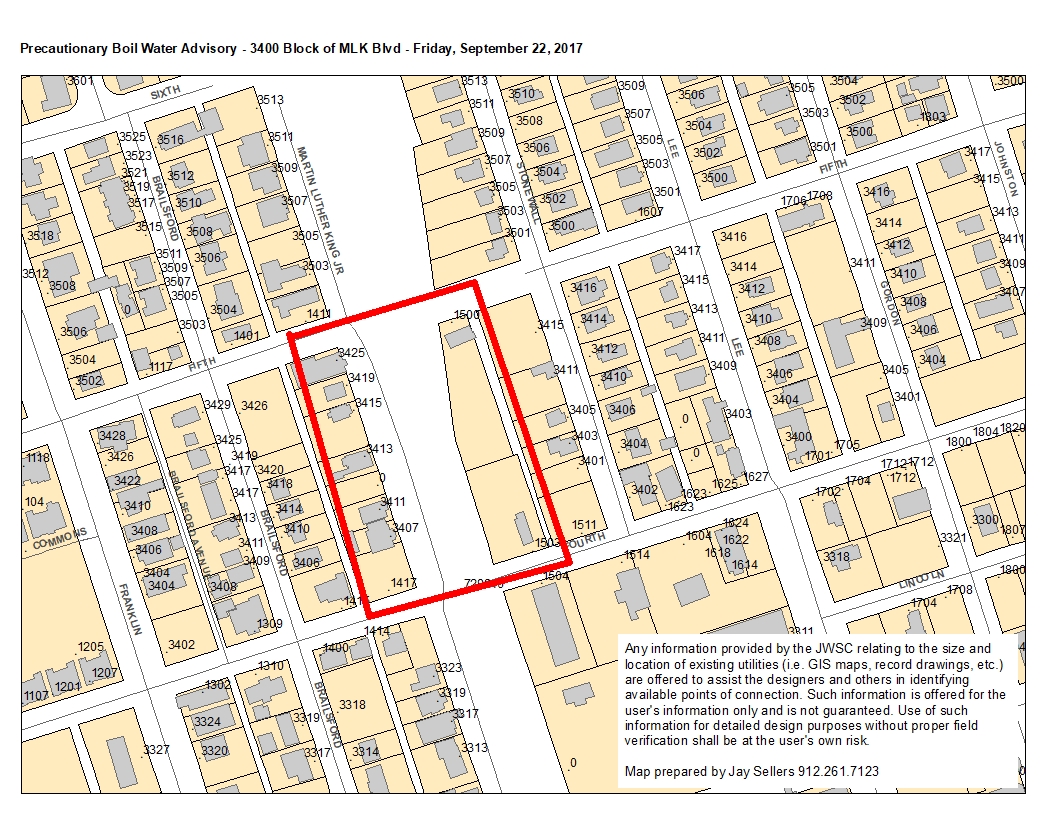
  • Precautionary Boil Water Advisory – 3400 Block of MLK Blvd in Brunswick – Friday, September 22, 2017

    DRINKING WATER WARNING

    BOIL YOUR WATER FOR THREE MINUTES BEFORE USING

    The Brunswick water system lost pressure in the area serving the 3400 block of MLK Blvd at 12:30 pm on Friday, September 22, 2017 due to a 2″ galvanized main being hit by a BGJWSC contractor. BGJWSC staff in onsite now restoring service. Once service is restored, BGJWSC lab personnel will collect water samples for testing. This testing, which takes between 22 and 24 hours, should be completed the afternoon of Saturday, September 23, at which time an all-clear message will be posted.

    This loss of pressure in the distribution system may cause back-pressure, back-siphonage, or a net movement of water from outside the pipe to the inside through cracks, breaks, or joints in the distribution system that are common in all water systems. Such a system failure carries with it a potential that bacterial contamination or other disease-causing organisms could enter the water distribution system. These conditions may pose an imminent and substantial health endangerment to persons served by the water system.

    This precautionary boil water advisory is being published as a warning to those that live in, work in, or travel through the affected area. During the period of the loss of pressure, water will also not be available for fire suppression use. The map below indicates the limit to which this precautionary boil water advisory applies:


    What should I do?

    • DO NOT DRINK THE WATER WITHOUT BOILING IT FIRST. Bring all water to a rolling boil for at least (3) three minutes, and let it cool before using, or use bottled water. Boiled or bottled water should be used for drinking, making ice, brushing teeth, washing dishes, and food preparation until further notice. Boiling kills bacteria and other organisms in the water. ALL STORED WATER, DRINK OR ICE MADE RECENTLY FROM THIS SUPPLY SHALL BE DISCARDED.
    • Bathing, showering and toilet flushing may be performed using water from the tap without boiling it first.
    • Inadequately treated water may contain disease-causing organisms. These organisms include bacteria, viruses, and parasites which can cause symptoms such as diarrhea, cramps, nausea, headaches, or other symptoms. They may pose a special health risk for infants, young children, some of the elderly and people with severely compromised immune systems.
    • The symptoms above are not caused only by organisms in drinking water. If you experience any of these symptoms and they persist, you may want to seek medical advice. People at increased risk should seek advice about drinking water from their health care providers.

    What is being done?

    As soon as pressure can be restored to the distribution system, our water lab personnel will take water samples that will be fully evaluated over the next twenty-four to forty-eight hour period following the repair of the main. Once we have determined that there is no longer a threat of harmful bacteria in the water, we will inform you that you are no longer required to boil your water by posting an update here on our website: http://www.bgjwsc.org.

    Date distributed: 9/22/17 12:54 PM

    What is a Boil Water Advisory? READ MORE HERE
  • All-Clear for Boil Water Advisory Issued for 1100 Block of Ocean Blvd on Wednesday, September 6, 2017

    Effective immediately, as of 1:oo PM on Thursday, September 7, 2017, all required microbiological testing of water samples from the area affected by the boil water advisory issued for the 1100 block of Ocean Blvd on Wednesday, September 6, 2017 has passed. Results have been verified by our state-licensed technician within a certified laboratory environment.

    This notification is an ALL-CLEAR and water used for drinking will no longer need to be boiled.

    Though the water from this system can now be considered to meet safe drinking water standards, please discard any ice made within the last 48 hours.

    What is a Boil Water Advisory? READ MORE HERE
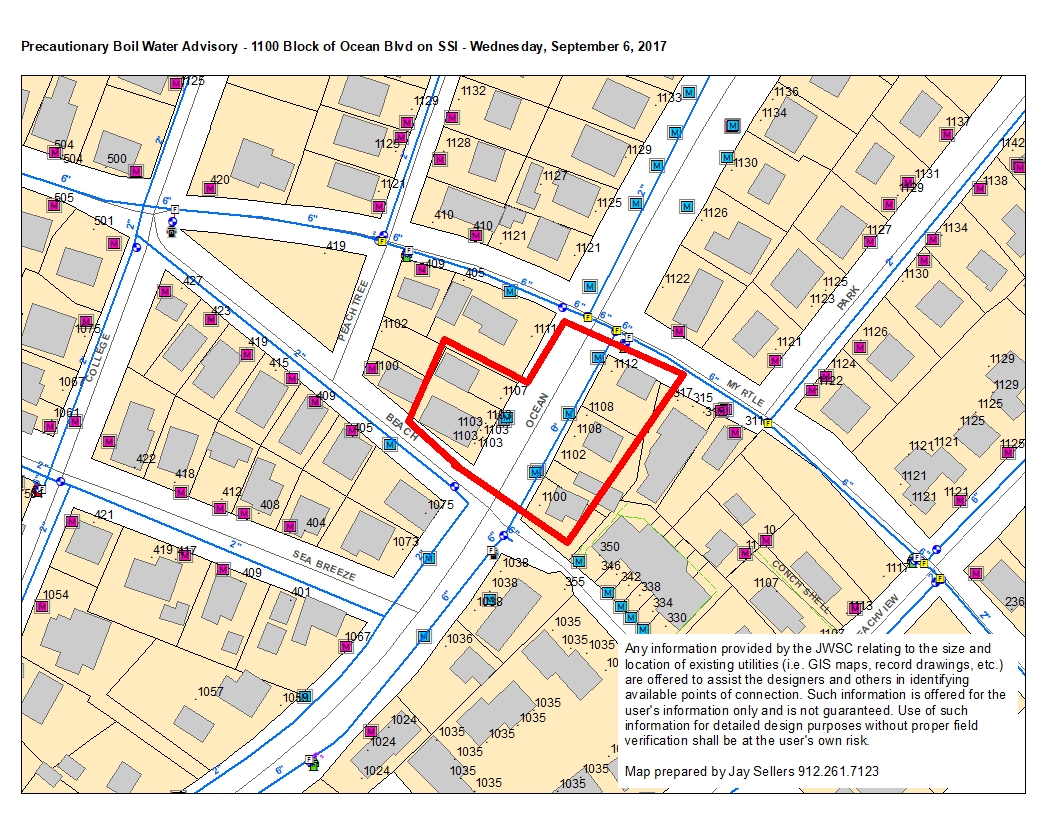
  • Precautionary Boil Water Advisory – 1100 Block of Ocean Blvd on St. Simons Island – Wednesday, September 6, 2017

    DRINKING WATER WARNING

    BOIL YOUR WATER FOR THREE MINUTES BEFORE USING

    The St. Simons Island water system lost pressure in the area serving the 1100 block of Ocean Blvd at 10:48 am on Wednesday, September 6, 2017 due to a 2″ PVC main being hit by a private irrigation contractor. BGJWSC staff in onsite now restoring service. Once service is restored, BGJWSC lab personnel will collect water samples for testing. This testing, which takes between 22 and 24 hours, should be completed the afternoon of Thursday, September 7, at which time an all-clear message will be posted.

    This loss of pressure in the distribution system may cause back-pressure, back-siphonage, or a net movement of water from outside the pipe to the inside through cracks, breaks, or joints in the distribution system that are common in all water systems. Such a system failure carries with it a potential that bacterial contamination or other disease-causing organisms could enter the water distribution system. These conditions may pose an imminent and substantial health endangerment to persons served by the water system.

    This precautionary boil water advisory is being published as a warning to those that live in, work in, or travel through the affected area. During the period of the loss of pressure, water will also not be available for fire suppression use. The map below indicates the limit to which this precautionary boil water advisory applies:


    What should I do?

    • DO NOT DRINK THE WATER WITHOUT BOILING IT FIRST. Bring all water to a rolling boil for at least (3) three minutes, and let it cool before using, or use bottled water. Boiled or bottled water should be used for drinking, making ice, brushing teeth, washing dishes, and food preparation until further notice. Boiling kills bacteria and other organisms in the water. ALL STORED WATER, DRINK OR ICE MADE RECENTLY FROM THIS SUPPLY SHALL BE DISCARDED.
    • Bathing, showering and toilet flushing may be performed using water from the tap without boiling it first.
    • Inadequately treated water may contain disease-causing organisms. These organisms include bacteria, viruses, and parasites which can cause symptoms such as diarrhea, cramps, nausea, headaches, or other symptoms. They may pose a special health risk for infants, young children, some of the elderly and people with severely compromised immune systems.
    • The symptoms above are not caused only by organisms in drinking water. If you experience any of these symptoms and they persist, you may want to seek medical advice. People at increased risk should seek advice about drinking water from their health care providers.

    What is being done?

    As soon as pressure can be restored to the distribution system, our water lab personnel will take water samples that will be fully evaluated over the next twenty-four to forty-eight hour period following the repair of the main. Once we have determined that there is no longer a threat of harmful bacteria in the water, we will inform you that you are no longer required to boil your water by posting an update here on our website: http://www.bgjwsc.org.

    Date distributed: 9/6/17 11:07 AM

    What is a Boil Water Advisory? READ MORE HERE

  • All-Clear for Boil Water Advisory Issued for Shadow Lake Drive on Sunday, August 27, 2017

    Effective immediately, as of 8:12 AM on Tuesday, August 29, 2017, all required microbiological testing of water samples from the area affected by the boil water advisory issued for 165 to 249 Shadow Lake Dr in Brunswick on Sunday, August 27, 2017 has passed. Results have been verified by our state-licensed technician within a certified laboratory environment.

    This notification is an ALL-CLEAR and water used for drinking will no longer need to be boiled.

    Though the water from this system can now be considered to meet safe drinking water standards, please discard any ice made within the last 48 hours.

    What is a Boil Water Advisory? READ MORE HERE

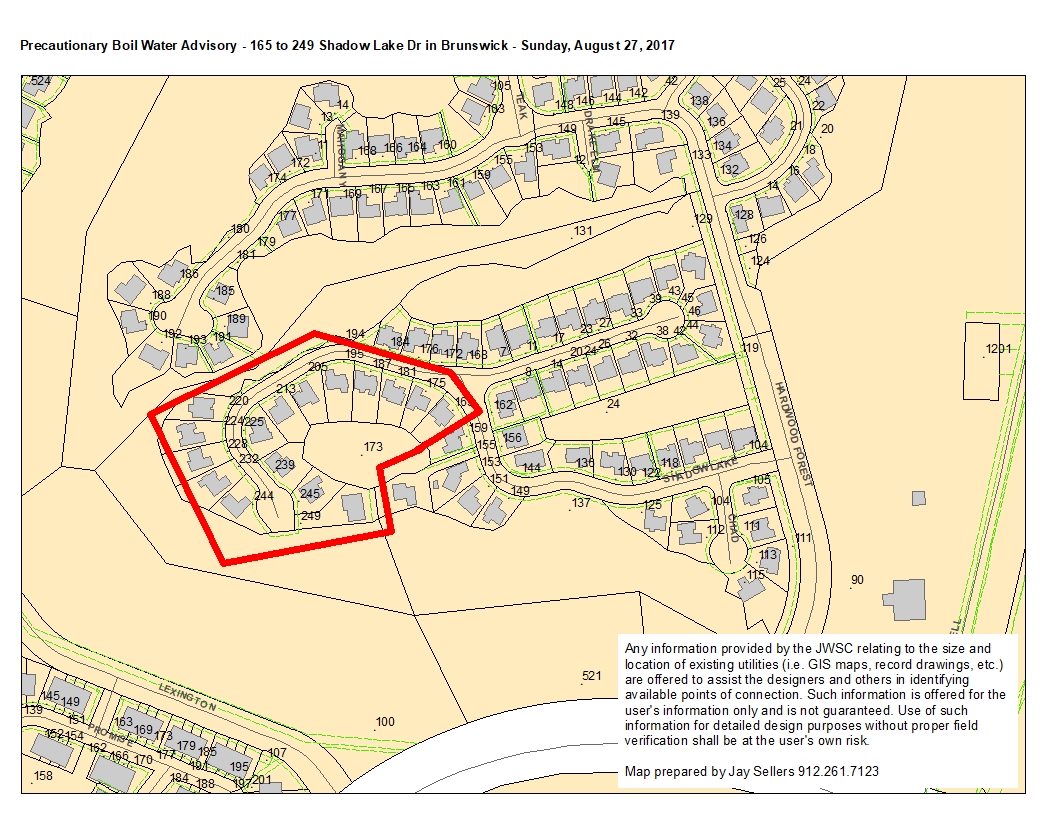
  • Precautionary Boil Water Advisory – 165 to 249 Shadow Lake Dr in Brunswick – Sunday, August 27, 2017

    DRINKING WATER WARNING

    BOIL YOUR WATER FOR THREE MINUTES BEFORE USING

    The Brunswick water system lost pressure in the area serving 165 to 249 Shadow Lake Dr in Brunswick at or around 8:30 am on Sunday, August 27, 2017 due to a fire hydrant isolation valve failure. BGJWSC staff in onsite now restoring service. Once service is restored, BGJWSC lab personnel will collect water samples for testing. This testing, which takes between 22 and 24 hours, should be completed the afternoon of Monday, August 28, at which time an all-clear message will be posted.

    This loss of pressure in the distribution system may cause back-pressure, back-siphonage, or a net movement of water from outside the pipe to the inside through cracks, breaks, or joints in the distribution system that are common in all water systems. Such a system failure carries with it a potential that bacterial contamination or other disease-causing organisms could enter the water distribution system. These conditions may pose an imminent and substantial health endangerment to persons served by the water system.

    This precautionary boil water advisory is being published as a warning to those that live in, work in, or travel through the affected area. During the period of the loss of pressure, water will also not be available for fire suppression use. The map below indicates the limit to which this precautionary boil water advisory applies:


    What should I do?

    • DO NOT DRINK THE WATER WITHOUT BOILING IT FIRST. Bring all water to a rolling boil for at least (3) three minutes, and let it cool before using, or use bottled water. Boiled or bottled water should be used for drinking, making ice, brushing teeth, washing dishes, and food preparation until further notice. Boiling kills bacteria and other organisms in the water. ALL STORED WATER, DRINK OR ICE MADE RECENTLY FROM THIS SUPPLY SHALL BE DISCARDED.
    • Bathing, showering and toilet flushing may be performed using water from the tap without boiling it first.
    • Inadequately treated water may contain disease-causing organisms. These organisms include bacteria, viruses, and parasites which can cause symptoms such as diarrhea, cramps, nausea, headaches, or other symptoms. They may pose a special health risk for infants, young children, some of the elderly and people with severely compromised immune systems.
    • The symptoms above are not caused only by organisms in drinking water. If you experience any of these symptoms and they persist, you may want to seek medical advice. People at increased risk should seek advice about drinking water from their health care providers.

    What is being done?

    As soon as pressure can be restored to the distribution system, our water lab personnel will take water samples that will be fully evaluated over the next twenty-four to forty-eight hour period following the repair of the main. Once we have determined that there is no longer a threat of harmful bacteria in the water, we will inform you that you are no longer required to boil your water by posting an update here on our website: http://www.bgjwsc.org.

    Date distributed: 8/27/17 9:22 AM

    What is a Boil Water Advisory? READ MORE HERE

  • All-Clear for Boil Water Advisory Issued for Hampton Point Area on Tuesday, August 22, 2017

    Effective immediately, as of 4:28 PM on Wednesday, August 23, 2017, all required microbiological testing of water samples from the area affected by the boil water advisory issued for portions of the north end of Hampton Point, including Hampton Club, the Hampton River Club Marina, Plantation Point, Rice Mill surrounding houses on St. Simons Island on Tuesday, August 22, 2017 has passed. Results have been verified by our state-licensed technician within a certified laboratory environment.

    This notification is an ALL-CLEAR and water used for drinking will no longer need to be boiled.

    Though the water from this system can now be considered to meet safe drinking water standards, please discard any ice made within the last 48 hours.

    What is a Boil Water Advisory? READ MORE HERE

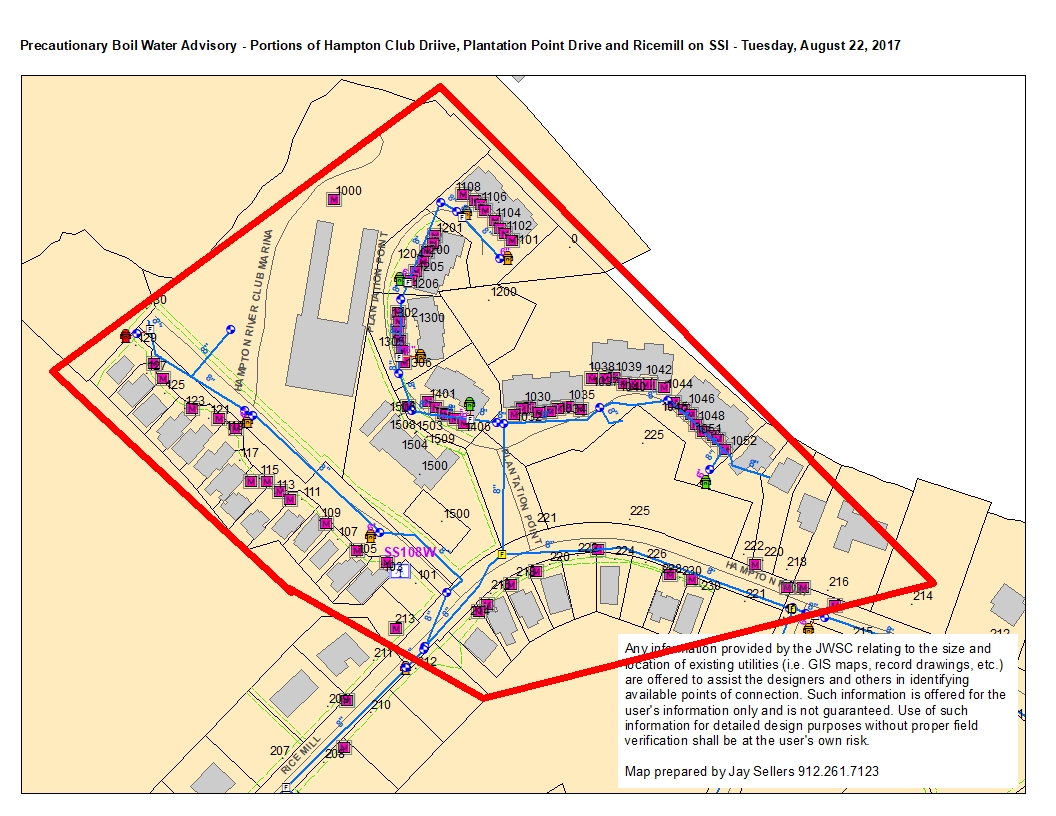
  • Precautionary Boil Water Advisory – Portions of Hampton Point on St. Simons Island – Tuesday, August 22, 2017

    DRINKING WATER WARNING

    BOIL YOUR WATER FOR THREE MINUTES BEFORE USING

    The St. Simons Island water system will lose pressure in the area serving portions of the north end of Hampton Point, including Hampton Club, the Hampton River Club Marina, Plantation Point, Rice Mill surrounding houses at 9:00 am on Tuesday, August 22, 2017 due to a repair being made by BGJWSC staff on the public well. Service is expected to be restored by 2:00 today at which time BGJWSC lab personnel will collect water samples for testing. This testing, which takes between 22 and 24 hours, should be completed the afternoon of Wednesday, August 23, at which time an all-clear message will be posted.

    This loss of pressure in the distribution system may cause back-pressure, back-siphonage, or a net movement of water from outside the pipe to the inside through cracks, breaks, or joints in the distribution system that are common in all water systems. Such a system failure carries with it a potential that bacterial contamination or other disease-causing organisms could enter the water distribution system. These conditions may pose an imminent and substantial health endangerment to persons served by the water system.

    This precautionary boil water advisory is being published as a warning to those that live in, work in, or travel through the affected area. During the period of the loss of pressure, water will also not be available for fire suppression use. The map below indicates the limit to which this precautionary boil water advisory applies:

    What should I do?

    • DO NOT DRINK THE WATER WITHOUT BOILING IT FIRST. Bring all water to a rolling boil for at least (3) three minutes, and let it cool before using, or use bottled water. Boiled or bottled water should be used for drinking, making ice, brushing teeth, washing dishes, and food preparation until further notice. Boiling kills bacteria and other organisms in the water. ALL STORED WATER, DRINK OR ICE MADE RECENTLY FROM THIS SUPPLY SHALL BE DISCARDED.
    • Bathing, showering and toilet flushing may be performed using water from the tap without boiling it first.
    • Inadequately treated water may contain disease-causing organisms. These organisms include bacteria, viruses, and parasites which can cause symptoms such as diarrhea, cramps, nausea, headaches, or other symptoms. They may pose a special health risk for infants, young children, some of the elderly and people with severely compromised immune systems.
    • The symptoms above are not caused only by organisms in drinking water. If you experience any of these symptoms and they persist, you may want to seek medical advice. People at increased risk should seek advice about drinking water from their health care providers.

    What is being done?

    As soon as pressure can be restored to the distribution system, our water lab personnel will take water samples that will be fully evaluated over the next twenty-four to forty-eight hour period following the repair of the main. Once we have determined that there is no longer a threat of harmful bacteria in the water, we will inform you that you are no longer required to boil your water by posting an update here on our website: http://www.bgjwsc.org.

    Water System ID#: 1270001

    Date distributed: 8/22/17 8:53 AM

    What is a Boil Water Advisory? READ MORE HERE